Life is tough and overwhelming.
There is the proximity of personal (and collective) hardships. There is suffering that cuts across space and time, live-streamed into omnipresent screens—genocide, famine, systemic injustice, and climate disasters. Somehow, one engages in the act of living itself: surviving, clinging to meaning in ways that make the act worth it.
To live, then, is to get better at living. In On Wanting to Change, Adam Phillips said that ‘getting better means working out what we want to get better at’. But while one does the ‘living’ amidst the chaos, what is one supposed to get better at? How does one get better at living in an unjust world? And what does peace have to do with it?
A lot, it seems.
Life is both dreadful and wonderful. To practice meditation is to be in touch with both aspects.
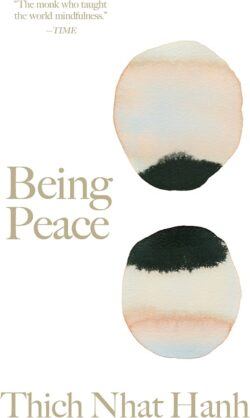
For Hanh, the practice of meditation is not for future’s sake, ‘but to be peace, to be compassion, to be joy right now’. And one is interconnected to others in non-trivial ways (what Hanh calls ‘inter-being’), even if one experiences life as an individual unit with agency. To be in touch with the dreadful and the wonderful and understand one’s own relationship to it all requires awareness. Nurturing this awareness, in my personal experience and those of many others, can be aided by the practice of meditation. And the practice is accessible to all in some form or the other.
To transform our situation is also to transform our minds. To transform our minds is also to transform our situation, because the situation is mind, and mind is situation. Awakening is important. The nature of the bombs, the nature of injustice, the nature of the weapons, and the nature of our own being are the same.
Hanh offers another approach to agency, one that is woefully under-explored. This isn’t agency that can be easily measured according to cost-benefit analyses of our time, it isn’t impact that can be represented in dollars. In this interpretation of agency, to do isn’t the only way to be. To not be (someone or something) can also be a powerful way of be-ing. Non-action can be as powerful as action. It is a challenge to the prevailing commonsense in which bias for action reigns in every field. A tremendous amount of energy goes into fixing unintended consequences or undoing ill-conceived actions.
The urgent demand for change makes some forms of action more desirable. These actions may help one adapt to the realism of these times—it may help one do well for the time being. But in adapting to a realism that is consistently in crisis mode, one misses the reality of interconnections, the conditions of our inter-being.
We have little time—we must proceed slowly.
What if one can nurture peace in the present? I imagine the space it could open up. It can make one reconsider the manifold strivings in one’s life and the extractive systems that feed them fodder. Instead of busy climbing ladders, one may redirect energy to connecting dots and building bridges. The void of imagination could be filled with creativity that peaceful, secure minds can offer.
Being at peace in the present seems counterintuitive. It is, in fact, demanding and revolutionary. Getting better at it may help us salvage and share kinder presents and futures.
I am, therefore you are. You are, therefore I am. That is the meaning of the word ‘interbeing’. We interare.
Be First to Comment