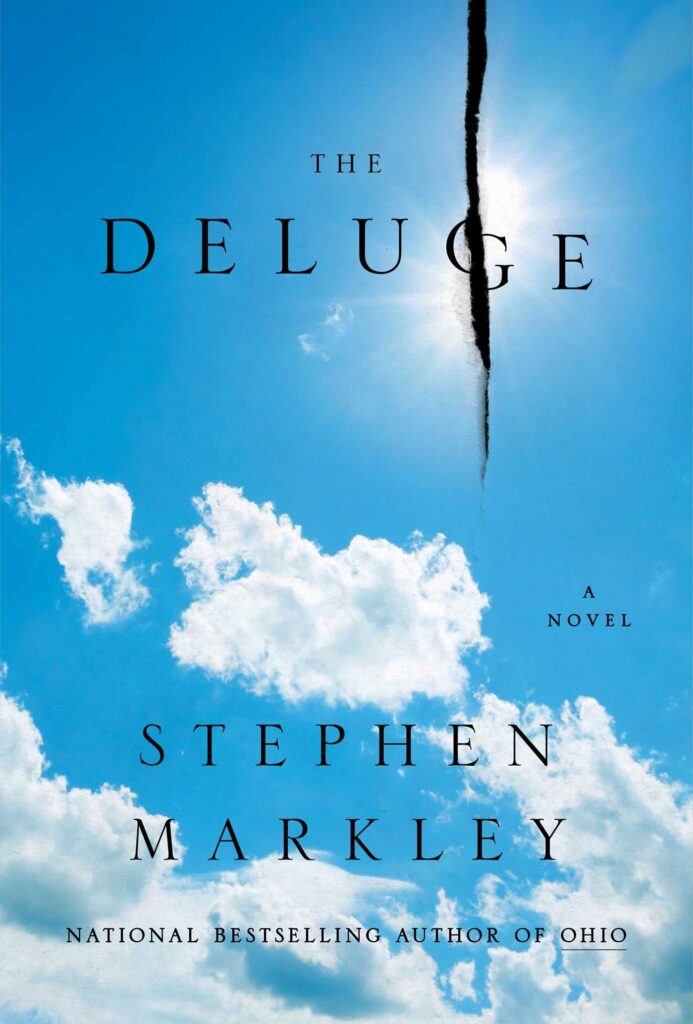
While I was in the middle of this novel, torrential rain and subsequent floods across 4 countries—Sri Lanka, Thailand, Indonesia and Malaysia—affected millions of lives. Cyclone Ditwah caused a national emergency in Sri Lanka, affecting 23 of its 25 provinces. We now know that 2025 is one of the warmest years on record. This devastation long departed the news cycle, replaced by variegated fascist shitshows. Our abilities to pay attention and to care are temporally and spatially stretched.
A few weeks before the floods, the 30th edition of the Conference of Parties took place in Belem, Brazil. The main decision of COP30 was to keep the danger limit of 1.5 C—the point beyond which devastating impacts are projected—“within reach”. Some scientists stated that this limit of 1.5 C will be breached but could be ‘brought back’ through interventions. Some others stressed the need to be ‘as close as possible to absolute zero fossil fuel emissions by 2040, the latest by 2045’. For this to happen, new fossil fuel investments would have to come to a halt, existing fossil fuels have to be phased out, and a transition to renewables in a just manner.
Despite all the statements and the devastating experiences of climate realities, COP30 failed to present a fossil fuel roadmap, the need for consensus preventing vital climate commitments. 1.5 is impossible to avoid (according to some scientists) and the goal has already shifted to an overshoot-and-return, interminable pipe dream: we will go beyond 1.5 C, but through technology, return below this threshold some time in the future. From what we know today, the consequences of triggering tipping points would most likely be irreversible. As things stand, overshoot and return is more faith-based than a scientifically informed plan. For individuals and societies, the question remains: in the face of spectacular inaction, what is to be done?
The Deluge traces trajectories from the near past to the near future, a period spanning about three decades (~2013 to 2040). In tracking this time, the book addresses climate realities with scientific precision, accounting for political realities and the human costs. Markley does this through a motley crew of characters, all caught in particular dilemmas owing to their professional roles, identities, and aspirations. Contradictions come to the fore when characters try to do well (i.e. strive for particular notions of ‘success’) and do good (engage in socially-good action).
But in our contemporary society, doing well and doing good are seldom assuredly commensurable. Climate change, what Stephen Gardiner calls ‘a perfect moral storm’, poses herculean ethical challenges to humanity.1 Beyond the perils of moral corruption and climate inaction, in this ‘perfect moral storm’, there is the threat of ‘shadow solutions’, policies that reflect only the limited concerns of powerful actors. These are solutions that are substantively inadequate, but create the illusion of serious action and allow for a deadly status quo to persist. How can one engage, even imperfectly, in such a storm?
Markley strategically (and admirably) leans on a spectrum of identities to present diverse standpoints in this moral storm. He conjures a believably bleak future rooted in sound climate science of the present. Electoral politics, too slow to address the climate emergency, maintains a precarious legitimacy. But its shortcomings fuel motivations for characters who seek to turn the tide, both within and without the system. Characters experiment (or delay), and take risks (or play safe) commensurate/incommensurate with the urgency climates crises demand.
While Markley is surprisingly sensitive to global perspectives, I found the centering of the US a bit irksome, even if understandable. It seems rather unlikely that the declining US empire shall provide support, let alone leadership, at this critical juncture (Donald Trump has officially signed the US out of the Paris climate agreement for the SECOND time). If one looks at the present, with all the cuts and withdrawals made by the current administration, it is difficult to imagine American leadership being pivotal in a redemptive arc, unless something drastically changes.
More importantly, books like The Deluge prompt a serious review of our real life ‘fictions’ and imagined communities that are unresponsive to the storms. Ta-Nehisi Coates wrote that “politics is the art of the possible, but art creates the possible of politics”. Storytelling—and art more generally—may reflect to us our own troubles, offering directions that can be promising when explored in solidarity. We need to bear witness to more stories, where people assume roles in unjust structures, explore their agency, products of contingencies figuring out better notions of meaning and freedom.
The purpose of good fiction like The Deluge isn’t prescriptive, but it can liberate the imagination for better realities. After all, science fiction writing, like Cory Doctrow said, isn’t about predicting an immutable future. It is about making ‘futuristic parables about techno-social arrangements’ that help us understand how these arrangements affect our lives, at what cost, and for whose benefits. As things stand, it is not difficult to guess that the indulgent freedoms of a few come today at a deadly planetary cost. It is difficult to wish away such costs that wouldn’t even justify prosperity (as we know it) for the many, let alone the tiny few. It is difficult to imagine life as usual, freedoms uninterrupted.
And yet, futures are amenable to change. Because they are, one must explore and imagine alternatives. The excitement and uncertainties of better forms of life await. There are always alternatives to consider for better freedoms. And it is through a critical examination and revaluation of one’s roles, identities, and agencies that there may be hope of successfully riding the storm.
- Climate change, according to Gardiner, brings together three, mutually reinforcing storms that are hard on their own but together create ‘the perfect storm’. The ‘global storm’ involves a pronounced asymmetry of power on two fronts: 1) emissions and impacts are spatially dispersed (and those who emit the least are those who suffer the most), and 2) the global rich take advantage of the global poor. The ‘intergenerational storm’ consists of intergenerational buck-passing, where each generation has incentives to defer burdens to its successors. Thirdly, there is the ‘theoretical storm’ in which our moral, political and economic theories seem underdeveloped on vital issues like intergenerational ethics, scientific uncertainty, and human-nature relationships. ↩︎
Be First to Comment